7 Must-Have Best 18 Month Old Learning Toys
When your toddler hits the 18‑month milestone, every giggle, grasp, and curious glance becomes a chance to build the foundations for lifelong learning. Selecting the right learning toys isn’t just about bright colors or noisy buttons; it’s about finding safe, developmentally‑aligned tools that nurture fine‑motor skills, language growth, and problem‑solving abilities while keeping little hands engaged. With countless options flooding the market, it’s easy to feel overwhelmed, which is why we’ve done the digging for you. In this guide we’ll review the top seven best 18‑month‑old learning toys, highlighting what makes each one stand out and how it can spark your child’s next big discovery. Let’s dive in and find the perfect play companion for your growing explorer.
7 Must-Have Learning Toys for 18-Month-Olds Reviewed
Discover how each of these carefully selected toys nurtures curiosity, fine motor skills, and early learning milestones for your growing toddler.
7. Tonberless Montessori Wooden Learning Puzzles

The Tonberless Montessori Toys are crafted from premium, sustainably sourced wood, giving little hands a safe, sturdy surface to explore. Each set includes 20 brightly colored pieces—five reds, oranges, yellows, greens, and blues—shaped as pentagons, squares, rectangles, triangles, and circles. The smooth, rounded edges and water‑based, non‑toxic paint protect delicate skin while keeping colors vivid and fade‑resistant. Designed for toddlers aged 1‑3, the blocks are perfectly sized for tiny fingers, encouraging grasping, shape recognition, and color sorting. Whether used as a stacking challenge, a shape‑sorting puzzle, or a travel companion, the pieces snap together in countless combinations, sparking imagination and fine‑motor development. Packaged neatly, they make an ideal birthday, Easter, Christmas, or everyday gift that grows with your child’s curiosity.
Pros
- Safe, high‑quality materials – solid wood, smooth edges, water‑based paint (non‑toxic, odorless, anti‑fade).
- Educational Montessori design – 20 pieces across five colors and five shapes promote color, shape, and spatial awareness.
- Versatile play – works as a sorter, stacker, travel toy, and imaginative building set.
Cons
- The set includes only one size of each shape, which may limit complexity for older toddlers.
- Small pieces could pose a choking hazard for children under 12 months; supervision is required.
6. V-Opitos Montessori Wooden Sorting Box

The V‑Opitos Montessori Sorting Box is a sturdy wooden learning set designed for curious toddlers aged 1‑3. The package includes a well‑crafted box with 25 brightly painted wooden chips in five shapes and five colors, plus a coin‑style insert that guides each piece into its matching slot. Children can practice color recognition by placing chips into the corresponding colored grids, reinforce shape awareness by fitting pieces onto pillars with matching holes, and develop early counting skills by sorting the five pieces of each shape. Made from natural, high‑quality wood and finished with BPA‑free, non‑toxic paint, every edge is sanded smooth and rounded for safe, comfortable handling. The multi‑functional design encourages hand‑eye coordination, fine‑motor control, problem‑solving and imaginative play—making it an ideal early‑education tool and a perfect gift for birthdays, Christmas, or any special occasion.
Pros
- Three‑in‑one learning: Combines color, shape, and number sorting for comprehensive early development.
- Durable & safe: Natural wood construction, non‑toxic paint, smooth rounded edges protect little hands.
- Engaging play: 25 vibrant pieces keep toddlers motivated and encourage repeated independent play.
Cons
- Limited expansion: The set is self‑contained; children may eventually desire additional pieces or more complex puzzles.
- Requires supervision: Small wooden chips could be a choking hazard for children under 12 months, so adult oversight is recommended.
5. Aigybobo Farm Animals Big Barn Toy

Aigybobo’s Farm Animals Big Barn Toy is a vibrant, Montessori‑inspired playset that turns any toddler’s room into a bustling countryside. The set includes a sturdy red barn, a friendly farmer figure, nine soft‑vinyl animal puppets and a sheet of DIY stickers so little hands can personalize the barn’s exterior. Bright colors and cute finger‑puppets spark curiosity, while the barn’s hinged doors invite kids to open, close, and explore, honing fine‑motor and hand‑eye coordination. Made from high‑quality ABS plastic that’s BPA‑free and smooth‑edged, the barn is safe and durable. Its foldable design (9.6″ L × 4.4″ W × 8.8″ H) and built‑in handle make it easy to store or take on the go, perfect for playdates, travel, or a quick indoor adventure. Whether used for imaginative role‑play, storytelling, or simple sticker art, this set supports early STEM learning and encourages creative expression for children aged 12‑18 months up to 3 years.
Pros
- Creative customization – DIY stickers let kids design their own barn, boosting imagination and fine‑motor skills.
- Safe, toddler‑friendly materials – BPA‑free ABS and soft vinyl are lightweight, odorless, and have smooth edges.
- Portable & space‑saving – Foldable with a handle for easy transport and storage.
Cons
- The barn’s size may be a bit large for very small play areas.
- Sticker sheet is reusable but may lose adhesive strength after extensive use.
4. LeapFrog Learning Friends 100 Words Book
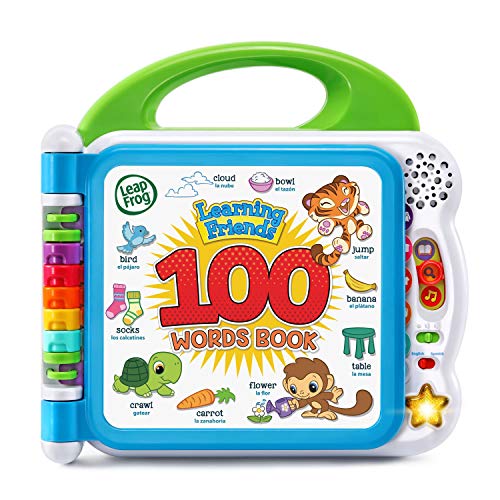
Meet Turtle, Tiger, and Monkey in this vibrant LeapFrog Learning Friends 100 Words Book. Designed for curious toddlers 18 months and up, the book invites little hands to tap, hear, and explore more than 100 age‑appropriate words across categories like pets, animals, food, colors, activities, opposites, and the outdoors. Each touch‑responsive page plays clear pronunciations, playful sound effects, and fun facts, while a light‑up star button launches two catchy theme songs.
The bilingual twist lets children hear every word, song, and instruction in both English and Spanish, encouraging early language development. The book comes in Frustration‑Free Packaging, making unboxing a breeze, and runs on two AA batteries (included for demo; fresh batteries recommended for regular use).
Pros
- Interactive learning: Touch‑activated words and sounds keep kids engaged while reinforcing vocabulary.
- Bilingual exposure: Simultaneous English and Spanish audio supports dual‑language skills from the start.
- Broad content variety: Multiple word categories and songs promote a well‑rounded early education.
Cons
- Requires AA batteries, so you’ll need to replace them periodically.
- The sound volume may be modest; a quiet environment is ideal for hearing all the audio clearly.
3. Peacurh PBT01 Learning Tablet

The Peacurh Trilingual Learning Toy Tablet is a vibrant, all‑in‑one educational companion designed for curious toddlers aged 12‑18 months up to 3 years. Its bright, oversized icons cover alphabet, shapes, colors, numbers, animals, vehicles, instruments, fruits and dates, turning everyday play into a multi‑sensory learning adventure. With a simple language switch, the tablet speaks English, Spanish, and French, reading each word aloud while pairing it with matching sound effects—perfect for building vocabulary, pronunciation, and listening skills.
Four distinct modes keep the fun fresh: Learning Mode introduces basic concepts, Quiz Mode challenges kids with questions, Music Mode launches cheerful tunes at the tap of a note, and Pretend Play mimics a real tablet with phone, message, and camera icons. Crafted from durable, BPA‑free plastic with smooth, rounded edges, it’s safe for little hands and lightweight enough for travel—ideal for car rides, road trips, or airplane seats.
Pros
- Trilingual instruction expands language exposure early, supporting English, Spanish, and French development.
- Four interactive modes keep engagement high and promote cognitive, auditory, and motor skill growth.
- Kid‑friendly design—large icons, soft edges, and a lightweight body—makes it safe and portable for on‑the‑go learning.
Cons
- The tablet’s limited screen size may feel restrictive for older toddlers who crave more visual detail.
- Sound volume is fixed; parents cannot adjust it, which could be noisy in quiet environments.
2. Melissa & Doug Farm Animals Toy Set
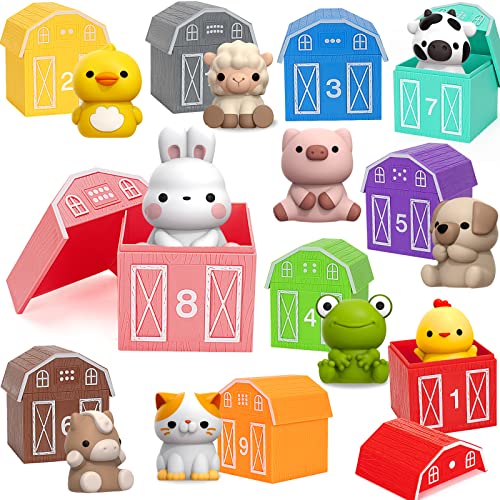
The Learning Toys set brings the farm right into your toddler’s playroom with 20 charming pieces – 10 cute farm‑animal figures and 10 matching barns. Each animal (cat, dog, duck, cow, rabbit, and more) is crafted from soft, odor‑less vinyl and designed with a generous finger hole, turning every piece into a tiny finger puppet. The sturdy plastic barns feature smooth, rounded edges and numbered lids, while the animal bodies display corresponding dot patterns, creating a seamless Montessori‑style counting, matching, and sorting experience.
Kids can practice “put‑in” and “take‑out” actions, open and close barn doors, and slide the animals in and out, which strengthens hand‑eye coordination and fine‑motor skills. The number‑dot pairing encourages early math concepts, color recognition, and classification, making the set a perfect speech‑therapy and STEM starter. All components are drop‑resistant, non‑fading, and meet strict safety standards, so parents can feel confident letting little hands explore.
Pros
- Multi‑sensory learning: Combines tactile finger‑puppet play with visual number‑dot matching for counting, color, and shape recognition.
- Fine‑motor development: Easy‑to‑grab holes and snug barn slots promote grasping, pinching, and coordination.
- Safe & durable: Odorless vinyl animals and smooth‑edged plastic barns are lightweight, drop‑resistant, and child‑friendly.
Cons
- The vinyl animals are soft, so very rough handling may cause minor surface wear over time.
- Barn lids are numbered only up to 10, which may limit extended numeric challenges for older toddlers.
1. Learning Resources Peekaboo Farm Toy

Discover the magic of farm‑yard fun with the Learning Resources Peekaboo Learning Farm. Each set comes with 10 vibrant pieces, including five adorable finger‑puppet animals—cow, pig, chicken, and more—nestled inside colorful, countable barns that surprise little hands with every peek. The two‑piece barns are perfectly sized for tiny fingers, encouraging fine‑motor development while toddlers practice counting, sorting, and early color recognition. As play evolves from imaginative puppet stories to simple math challenges, the farm grows alongside your child’s curiosity. Ideal for holidays, birthdays, or as a stocking stuffer, this versatile set also doubles as a sensory fidget toy, helping build nerve connections and boost sensory exploration.
Pros
- Multi‑stage learning: Transitions from pretend play to counting, sorting, and color matching.
- Fine‑motor development: Small barns and finger puppets strengthen hand‑eye coordination.
- Portable & gift‑ready: Compact design makes it perfect for stocking stuffers, Easter baskets, or homeschool kits.
Cons
- Limited animal variety: Only five puppets are included, which may prompt a desire for additional farm friends.
- Small parts caution: Not suitable for children under 18 months due to choking hazards.
Buying Guide
When selecting learning toys for an 18‑month‑old, focus on safety, engagement, and developmental value. The right toy should spark curiosity while supporting motor, language, and cognitive milestones.
- Choose toys made from non‑toxic, BPA‑free materials with smooth edges and sturdy construction that meet safety standards.
- Pick bright colors, simple cause‑and‑effect actions, and easy‑grip handles that suit an 18‑month‑old’s fine‑motor skills.
- Select toys that encourage stacking, sorting, or basic language to boost problem‑solving, spatial awareness, and early vocabulary.
- Prefer durable designs that survive rough play and offer multiple modes, ensuring good value over time.
- Read parent reviews and choose reputable brands, as real‑world feedback reveals true durability and educational impact.
By weighing safety, developmental relevance, durability, cost, and trusted feedback, you can choose toys that grow with your child and make learning fun.
Frequently Asked Questions
What are the top learning toys for an 18‑month‑old?
- Stacking Rings – Helps develop fine motor skills, hand‑eye coordination, and color recognition.
- Shape Sorters – Introduces problem‑solving and basic geometry concepts.
- Musical Activity Table – Encourages cause‑and‑effect learning, rhythm, and language development with buttons, drums, and lights.
How can I choose safe and age‑appropriate toys for my 18‑month‑old?
- Check the age label – Look for toys rated for 18 months or older.
- Material safety – Opt for BPA‑free, non‑toxic plastics or sustainably sourced wood.
- Size matters – Ensure all parts are larger than 1 inch (2.5 cm) to prevent choking hazards.
- Durability – Choose sturdy toys that can withstand chewing and rough handling.
What features make a learning toy especially beneficial at 18 months?
- Multi‑sensory engagement – Toys that combine visual, auditory, and tactile elements keep toddlers interested and support brain development.
- Open‑ended play – Items that can be used in many ways (e.g., blocks, stacking cups) foster creativity and imagination.
- Interactive feedback – Lights, sounds, or movement that respond to the child’s actions reinforce cause‑and‑effect understanding.
Conclusion
When choosing learning toys for an 18‑month‑old, the most important factors are safety, developmental relevance and lasting engagement. Opt for items that encourage exploration through bright colors, varied textures, and simple cause‑and‑effect mechanics, as these stimulate curiosity and support emerging motor skills. Toys that grow with the child—offering multiple ways to play as abilities expand—provide better value and keep little hands interested. Prioritizing sturdy, non‑toxic materials ensures durability and peace of mind, while open‑ended designs foster imagination and problem‑solving. By focusing on these core principles, parents can confidently select playthings that both delight and nurture their toddler’s early learning journey.