
7 Best Toys for Learning Shapes Kids Love
Every parent knows that mastering basic shapes is the first stepping stone toward spatial reasoning, problem‑solving, and later math skills, yet the market is flooded with toys that look appealing but miss the mark on educational value. Picking the right shape‑learning toy means giving children hands‑on, age‑appropriate challenges that spark curiosity without overwhelming them, while also fitting into a busy household’s budget and space constraints. In this post we’ve sifted through countless options, tested durability, engagement, and developmental impact, and assembled a curated list of the top seven toys that truly turn playtime into a learning adventure. Each recommendation lists key features, ideal age range, and why it stands out, so you can choose confidently. Let’s explore the best picks together.
7 Top Toys for Learning Shapes – Best Picks
Explore our carefully curated selection of seven engaging toys that turn shape recognition into a fun, hands‑on learning adventure for kids.
7. Learning Journey Lift & Learn Puzzle

The Lift & Learn – Colors & Shapes puzzle packs 16 bright, wood‑grain pieces that snap into a sturdy board (11” × 0.4” × 15”, 1.72 lb). Each piece features a raised texture and a line of handwriting‑styled text, making it easy for tiny fingers to lift, match, and recognize colors, shapes, and simple spelling. The vivid illustrations keep little eyes engaged while the tactile surfaces develop fine‑motor control and hand‑eye coordination. Designed for children 3+, this award‑winning puzzle (Creative Child Magazine Puzzle of the Year) meets rigorous domestic and international safety standards, so parents can feel confident about playtime. Beyond the basics, the set encourages problem‑solving, boosts self‑esteem through small victories, and reinforces word recognition—making learning feel like a fun adventure.
Pros
- Multi‑sensory learning – bright colors, raised textures, and lined text support visual, tactile, and early literacy skills.
- Developmental boost – improves fine motor skills, hand‑eye coordination, and problem‑solving confidence.
- Award‑winning safety – rigorously tested and compliant with global toy safety regulations.
Cons
- Limited piece count – only 16 pieces may feel short for older preschoolers seeking more complex challenges.
- Fixed board size – the rectangular shape may not fit easily into some storage spaces.
6. Learning Resources Smart Snacks Shape Sorting Cupcakes

The Learning Resources Smart Snacks Shape Sorting Cupcakes turn everyday playtime into a vibrant classroom. Each set includes eight bright, bakery‑style cupcakes with removable tops that hide a distinct shape—circle, square, triangle, star, and more. Children match the shape on the cupcake lid to the matching cavity in the pan, reinforcing color and shape recognition while they practice fine‑motor coordination by lifting, turning, and snapping the pieces together. Made from a thick, rubber‑like plastic, the cupcakes stay sturdy through chewing, dropping, and countless pretend‑baking sessions, keeping their colors vivid for years.
These cupcakes aren’t just a snack‑themed toy; they’re a multi‑purpose learning tool. Little chefs can stage tea parties, bake in a toy kitchen, or use the set for counting and sorting activities that grow with them from 18 months up through early elementary school. The hands‑on nature of the play supports hand‑eye coordination, bilateral coordination, and early math concepts, making it an ideal addition to Montessori‑style classrooms, homeschooling curricula, or any playroom that values educational fun.
Pros
- Dual‑learning design – each cupcake teaches both shape and color matching, plus offers a counting/ sorting component.
- Durable, child‑safe material – thick, rubber‑like plastic resists chewing and drops while retaining bright hues.
- Versatile play scenarios – fits into pretend kitchens, bakeries, tea parties, or structured learning activities.
Cons
- Small parts may be a choking hazard for children under 18 months; supervision is recommended.
- The set focuses on basic shapes, so older children may outgrow the challenge quickly.
5. Melissa & Doug Shape Sorting Cube

The Melissa & Doug Shape‑Sorting Cube is a timeless wooden toy that turns learning into a hands‑on adventure. Crafted from sturdy, sustainably sourced wood, the cube features 12 bright‑colored shapes that are easy for little fingers to grip and slide into their matching holes. Each shape reinforces color and shape recognition while encouraging problem‑solving and fine‑motor development. The classic design has delighted toddlers for over three decades, and the cube’s smooth finish and robust construction mean it can survive the inevitable drops and tosses of early play. Packaged in a kid‑friendly box, it makes a perfect screen‑free gift for children ages 2‑4, especially when paired with the Melissa & Doug 100‑Piece Wooden Block Set for an expanded building experience. Backed by the brand’s “gold standard” reputation and a 100 % Happiness Guarantee, parents can feel confident that this toy will inspire curiosity and creativity.
Pros
- Durable wooden build – stands up to rough play and lasts for years.
- Educational multitask – teaches shape, color, and fine‑motor skills in one fun activity.
- Age‑appropriate design – easy‑to‑grip pieces and safe, smooth edges for toddlers 2‑4.
Cons
- Limited variety – only 12 shapes, so children may outgrow the challenge quickly.
- No storage compartment – pieces must be kept in a separate container, which adds an extra step for cleanup.
4. Learning Resources Shape & Color Garden

Kids can explore a bright, bite‑size garden right in the backyard or on a patio. The Learning Resources Shape & Color Garden comes with 10 vivid flower “blooms,” each stamped with a shape and number that fits snugly into matching pots. As little hands plant each piece, they practice shape‑recognition, counting, and fine‑motor coordination—all while learning simple sustainability facts from the included activity guide.
Built for tiny fingers, the mix of flowers and succulents encourages color‑sorting and early math concepts, while the sturdy, 70 % post‑consumer recycled‑plastic pieces stand up to outdoor play. Designed by educators since 1984, the set is a classroom‑approved tool that occupational therapists also love for its developmental benefits. Whether tucked into a Christmas stocking, added to an Easter basket, or used for back‑to‑school fun, this award‑winning garden makes learning feel like a natural adventure.
Pros
- Hands‑on learning: Planting, matching, and counting develop shape, color, and number skills.
- Eco‑friendly durability: Made mostly from recycled plastic, it’s tough enough for outdoor use and gentle on the planet.
- Teacher‑tested: Created with input from teachers and therapists, ensuring age‑appropriate challenges.
Cons
- Limited piece variety: The set focuses on 10 flowers, so once the garden is complete, replay value may rely on rearranging rather than new content.
- Outdoor‑only recommendation: While safe indoors, the full experience shines best outside, which may limit play in small apartments.
3. Dailyfunn Montessori Sorting Box
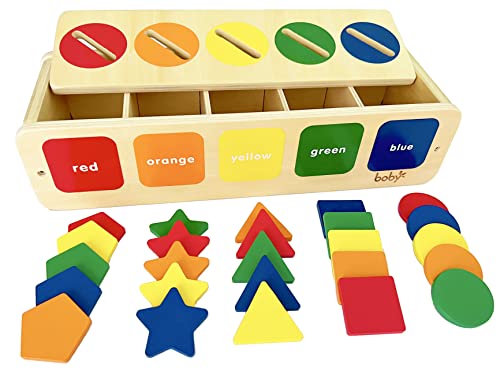
The Dailyfunn Montessori Toys Color & Shape Sorting Learning Matching Box is a thoughtfully designed educational set for babies and toddlers aged 1‑3 years. It contains 25 solid‑wood pieces in five vibrant colors and five classic shapes, plus 13 answer cards for an advanced logical‑thinking mode. Inspired by Dr. Maria Montessori’s philosophy, the toy encourages independence, self‑esteem, and hands‑on learning while fitting seamlessly into a modern home environment. Simple yet engaging, children practice motor skills, hand‑eye coordination, and color‑shape matching through intuitive movements. Crafted from natural wood—no MDF—the pieces are sturdy and built for long‑lasting play. All components are BPA‑free, non‑toxic, and meet or exceed U.S. safety standards, reflecting Dailyfunn’s commitment to total customer satisfaction.
Pros
- Holistic development: Promotes fine motor skills, cognitive reasoning, and emotional confidence in one playset.
- High‑quality materials: Natural wood construction ensures durability and a safe, chemical‑free experience.
- Flexible learning: Includes answer cards for an advanced mode, allowing the toy to grow with your child’s abilities.
Cons
- Limited age range: Best suited for 1‑3 year‑olds; older children may outgrow the challenge quickly.
- No storage bag: Pieces are supplied in a box only, which may be less convenient for travel or tidy storage.
2. Fisher-Price Stacking Toy Blocks Set

The Fisher‑Price Stacking Toy Baby’s First Blocks Set brings bright, tactile learning to little hands. This collection of 10 vivid, shape‑specific blocks fits snugly into a sturdy bucket, making clean‑up a breeze. The bucket’s easy‑carry handle turns any room—or a family outing—into a portable play zone. Each block slides through the shape‑sorter lid, encouraging babies to explore colors, match shapes, and develop the hand‑eye coordination needed for future stacking and building adventures. Designed for infants 6 months and older, the set grows with your child, offering endless opportunities for problem‑solving and fine‑motor skill refinement.
Pros
- All‑in‑one storage: Blocks nest inside the bucket, reducing clutter and keeping pieces together.
- Portable play: The built‑in handle makes it simple to take the toy on trips or to a friend’s house.
- Developmental boost: Sorting, stacking, and dropping activities nurture color/shape recognition, fine motor control, and early problem‑solving skills.
Cons
- Limited complexity: As toddlers advance, they may outgrow the simple shapes and seek more challenging puzzles.
- Small parts caution: Although sized for infants, the blocks are still small enough to pose a choking hazard if not supervised.
1. Educational Insights Shapes Bean Bags

Educational Insights Shapes Bean Bags turn everyday play into a hands‑on learning adventure. Each set comes with ten lightweight, washable bean bags in a rainbow of colors and a variety of basic shapes—circle, square, triangle, star, and more. One side of every bag proudly displays its shape name, while the opposite side shows the color name, giving toddlers a clear visual cue for sorting, matching, and naming. The sturdy, fabric‑filled bags are perfectly sized for little hands, making picking, tossing, catching, and stacking both fun and developmentally beneficial. A convenient drawstring carry bag and a parent/teacher guide round out the package, so you can easily bring the learning station to the classroom, playroom, or on‑the‑go.
Pros
- Boosts early literacy – Shape and color labels help kids identify and verbalize basic concepts.
- Develops motor skills – Tossing, catching, and stacking the bean bags strengthen fine and gross motor coordination.
- Portable & durable – Washable fabric and a handy carry bag keep the toys ready for any setting.
Cons
- Limited shape variety – Only ten distinct shapes may feel repetitive after extended use.
- Small parts caution – While designed for ages 3+, younger siblings could pose a choking hazard.
Buying Guide
When choosing toys that teach shapes, focus on items that blend engagement with educational value. The right toy should spark curiosity while reinforcing recognition through hands‑on play.
- Material quality and safety – Opt for non‑toxic, BPA‑free plastics or sustainably sourced wood, and ensure all edges are rounded to meet safety standards.
- Age‑appropriate complexity – Select a set that matches the child’s developmental stage, offering simple shape matching for toddlers and more challenging puzzles for preschoolers.
- Interactive features – Look for toys that incorporate sound, color‑coding, or magnetic pieces to keep children motivated and reinforce learning through multiple senses.
- Durability and ease of cleaning – Choose robust construction that can withstand rough handling, and surfaces that wipe clean to maintain hygiene.
- Price and reviews – Compare cost against the number of pieces and educational content, and read verified parent reviews to gauge real‑world satisfaction.
By weighing these factors, you’ll find a shape‑learning toy that is safe, engaging, and built to last, turning playtime into a valuable learning experience.
Frequently Asked Questions
What are the best toys for teaching basic shapes to toddlers?
Answer: Look for sturdy, brightly colored shape sorters, wooden puzzle boards, and stacking rings that feature circles, squares, triangles, and rectangles. Brands such as Melissa & Doug, Fat Brain Toys, and Hape offer high‑quality options with easy‑grip pieces and non‑toxic finishes, making them ideal for hands‑on shape recognition.
How can I choose age‑appropriate shape toys?
Answer:
– 0‑12 months: Soft fabric or silicone shape‑matching toys with large, easy‑to‑grab pieces.
– 12‑24 months: Simple wooden or plastic sorters with 4‑6 basic shapes and a shallow container.
– 2‑3 years: Puzzle boards or magnetic shape sets that add a slight challenge (e.g., fitting shapes into outlines or creating pictures).
Check the manufacturer’s age recommendation and ensure pieces are large enough to avoid choking hazards.
Are there multi‑sensory shape toys that also develop other skills?
Answer: Yes! Toys that combine shapes with textures, sounds, or colors boost multiple developmental areas. Examples include:
– Shape‑sorting cubes with textured surfaces – develop tactile discrimination.
– Magnetic shape sets with bright, glossy pieces – encourage fine‑motor control and visual‑spatial reasoning.
– Interactive electronic shape sorters that play music or narrate when a shape is placed correctly – reinforce language skills and cause‑and‑effect understanding.
Conclusion
Choosing the right shape‑focused toys can transform a child’s playtime into a powerful learning experience, fostering spatial awareness, fine‑motor skills, and early math concepts while keeping curiosity alive. Prioritize items that invite hands‑on exploration, offer varied textures and colors, and grow with your child’s developing abilities. Look for toys that encourage open‑ended play, provide clear feedback, and integrate storytelling or language cues to deepen comprehension. By selecting engaging, durable, and age‑appropriate options, you’ll support confidence, problem‑solving, and a lifelong love of discovery—all while turning everyday fun into a stepping stone toward more advanced STEM learning.

