
7 Best Toys for Language Development to Boost Kids’ Speech
Finding the perfect toy that sparks a child’s love for words can feel like searching for a needle in a haystack, yet the payoff is priceless: richer vocabularies, stronger communication skills, and a boost in confidence that lasts a lifetime. Parents, educators, and caregivers know that the right playtime tools don’t just entertain—they lay the groundwork for early literacy and social interaction. In this guide we’ve sifted through countless options to spotlight the seven standout toys that blend fun with proven language‑building benefits. Whether you’re shopping for a toddler just beginning to babble or a preschooler ready to form full sentences, these picks will help you make an informed, joyful choice.
7 Must-Have Toys for Language Development – Top Picks
Explore our carefully curated selection of seven engaging toys that spark conversation, boost vocabulary, and nurture early communication skills.
7. Tabitha Paige Library Board Book Set

Our Little Library: A Foundational Language Vocabulary Board Book Set for Babies introduces toddlers to the world’s most recognizable words through sturdy, chew‑proof pages and vivid, full‑color illustrations. Each board book focuses on a single theme—farm & forest animals, fruits & veggies, toys, and more—making it easy for little hands to turn pages and for tiny eyes to spot the familiar objects they love. The simple, single‑word labels are printed in large, high‑contrast type, supporting early word‑recognition skills while encouraging parents to point, name, and repeat. The set’s compact size fits perfectly on a shelf or in a diaper bag, turning any moment into a mini‑learning adventure.
Pros
- Focused vocabularies – each book isolates a specific category, helping babies build connections between pictures and words without overload.
- Durable board format – thick, rounded edges survive drools, bites, and tumble‑downs, making the books last through repeated use.
- Bright, realistic artwork – clear, engaging illustrations capture a child’s attention and spark curiosity about everyday objects.
Cons
- Limited text – the single‑word approach may feel too sparse for older toddlers who are ready for simple sentences.
- No interactive elements – the set relies solely on visual learning; families seeking touch‑and‑feel or sound features will need supplemental resources.
6. hand2mind Phoneme Phone

The hand2mind Phoneme Phone turns ordinary playtime into a focused language‑learning experience. Kids place the soft “receiver” to their ear, whisper a word, and instantly hear their own voice amplified back to them. This immediate feedback helps children hear the nuances of each sound, building phonemic awareness while they explore speech, reading, and ESL concepts. The sturdy, kid‑friendly design makes it perfect for classroom drills, homeschool kits, or imaginative pretend‑play scenarios, giving toddlers and older learners a multisensory tool that bridges speaking and reading.
Key Features
– ESL Teaching Materials – Enhances listening skills for English‑as‑a‑second‑language learners and supports general speech development.
– Phonemic Awareness Builder – Amplified self‑voice lets students hear and correct their own articulation.
– Reading Whisper Phones – Ideal for “speech‑to‑print” activities, linking spoken sounds to written letters.
– Speech Therapy Toy – Fun, engaging tool for therapy sessions at any age.
– Kindergarten Homeschool Supply – Complements literacy and language‑arts curricula at home or in school.
Pros
- Immediate auditory feedback helps children self‑correct and internalize sound patterns.
- Multisensory learning boosts retention for both speech therapy and ESL instruction.
- Durable, kid‑safe design encourages independent use during play or structured lessons.
Cons
- The phone relies on quiet environments; background noise can reduce clarity.
- Battery‑powered; users must monitor charge or replace batteries regularly.
5. Hahaland LKT-1 Language Tablet

The hahaland 5‑Language Learning Tablet for Toddlers 1‑3 is a compact, screen‑free educational toy that turns everyday play into a multilingual adventure. With more than 90 interactive modules, the tablet covers animals, shapes, musical instruments, vehicles, letters, numbers and colors, all spoken in English, French, Spanish, German and Italian. Kids simply press one of the 39 bright icons and the tablet reads the word aloud, reinforcing vocabulary, pronunciation and listening skills—making it an excellent speech‑therapy aid for ages 1‑3.
Four distinct learning modes keep curiosity alive: Learning Mode introduces basic concepts, Quiz Mode sharpens problem‑solving, Music Mode encourages creativity with melodies, and Pretend Play Mode lets little hands explore a phone, camera and more. Responsive touch controls nurture fine and gross motor development while the sturdy, BPA‑free ABS body survives drops and bumps. Its lightweight, portable design means it’s ready for home, car rides or family trips, and it makes a thoughtful birthday or holiday gift for both boys and girls.
Pros
- Multilingual, screen‑free learning boosts language skills without exposing toddlers to a digital screen.
- Four engaging modes support cognitive, creative and motor development in a single toy.
- Durable, BPA‑free construction ensures safety and longevity for active play.
Cons
- Limited to five languages; families needing additional language options may need supplemental tools.
- No rechargeable battery—requires AA batteries, which adds ongoing cost.
4. Peacurh Trilingual Tablet

The Peacurh Trilingual Learning Toy Tablet is a vibrant, all‑in‑one educational companion for curious toddlers aged 12‑18 months up to 3 years. Designed like a real tablet, it introduces the alphabet, shapes, colors, numbers, animals, vehicles, instruments, fruits, and dates across three languages—English, Spanish, and French. Each of the 39 brightly colored icons speaks the word aloud and adds matching sound effects, helping little hands develop fine‑motor skills while boosting vocabulary, listening, and pronunciation.
Four play modes keep the experience fresh: Learning Mode for basic concepts, Quiz Mode for interactive questioning, Music Mode for sing‑along fun, and Pretend Play that mimics phone, message, and camera functions. The sturdy, BPA‑free plastic body features smooth, rounded edges and oversized icons that are easy for tiny fingers to press. Its lightweight design makes it perfect for travel—whether in a car seat, on a plane, or at grandma’s house.
Pros
- Trilingual education expands language exposure early, supporting English, Spanish, and French fluency.
- Multi‑mode interactivity (learning, quiz, music, pretend) keeps children engaged and promotes cognitive growth.
- Durable, child‑safe construction with large icons and a lightweight form factor ideal for on‑the‑go play.
Cons
- The sound volume may be too loud for quiet environments; a volume‑control option would be helpful.
- Limited content updates; the tablet relies on pre‑loaded material and cannot add new lessons via software.
3. Learning Resources Elephant in the Room

The Learning Resources Elephant in the Room Positional Word Activity Set turns everyday play into a powerful language‑building adventure for kids ages 4 and up. Children move cute animal figures and everyday objects through four bright, interchangeable rooms, learning positional words such as in, on, under, and behind while developing spatial awareness. The set offers three distinct ways to play: recreate scenes from 30 double‑sided activity cards, spin the included spinner to decide where the friendly elephant goes, or practice early spelling with 10 CVC word cards. Speech‑therapist‑approved activities boost vocabulary, sentence structure, and critical‑thinking skills, making it an ideal classroom or family‑game night tool.
The sturdy box doubles as a playhouse and folds flat for compact storage, keeping pieces organized after each session. With 48 pieces—including 5 figures, a rug, divider, and spinner—this set delivers endless, hands‑on learning that feels more like fun than study.
Pros
- Multi‑modal learning: Positional language, sentence building, and early spelling are all covered in one set.
- Versatile play options: Cards, spinner, and free‑play encourage repeated use and creativity.
- Space‑saving design: The box transforms into a playhouse and folds for tidy storage.
Cons
- Age range: Some younger toddlers may find the small CVC cards challenging without adult help.
- Component size: The figures are small, so supervision is recommended for children who still put objects in their mouths.
2. LeapFrog LeapStart Learning System

The Talking Flash Cards for Toddlers 1‑3 are a Montessori‑inspired language companion that turns everyday learning into a playful adventure. Each of the 224 cards pairs a bright, child‑friendly illustration with clear, phonetic text and a recorded pronunciation, organized into 12 everyday themes such as animals, daily life, and actions. Kids simply slide a card into the compact reader, press the left button, and hear the word spoken aloud—an intuitive 1‑click operation that even tiny hands can master. Designed by early‑childhood specialists, the set blends visual and auditory cues to boost word recognition, speech association, and focus, while the quiet, portable design makes it perfect for both home play and on‑the‑go learning. The cards are made from thick, non‑toxic material that resists bending and tearing, ensuring durability through countless learning sessions.
Pros
- Comprehensive vocabulary: 224 essential words across 12 themes give a solid foundation for language development.
- Kid‑friendly operation: One‑click button and easy card insertion foster independent play.
- Safe, sturdy construction: Thick, non‑toxic cards withstand rough handling and last long.
Cons
- Battery dependent: The reader requires replaceable batteries, adding a small ongoing cost.
- Limited language options: Currently only available in English, which may limit bilingual households.
1. Airbition Talking Flash Cards
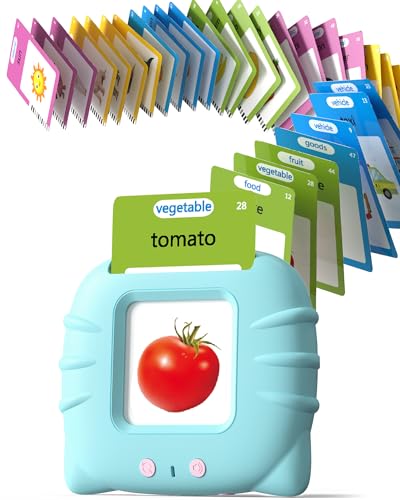
The Airbition Talking Flash Cards turn everyday play into a Montessori‑style language adventure. With 224 vivid illustrations—from animals and vehicles to fruits, vegetables, and everyday objects—each card lights up and speaks in a clear American accent. Kids simply slide a card into the sturdy reader, press the repeat button, and hear realistic sounds that reinforce word‑picture connections, boosting vocabulary and cognitive development.
Designed as a speech‑therapy and sensory tool, the sound‑image combo encourages active listening and articulation practice, making it ideal for both home learning and professional therapy sessions. The device is screen‑free, helping to protect young eyes while offering a fun, interactive alternative to tablets. A rechargeable battery provides up to four hours of continuous play, and the built‑in auto‑off function conserves power. Volume is easily adjusted with a five‑level control, and the compact reader is perfect for travel, road trips, or waiting rooms.
Overall, this learning companion is suitable for children 1‑5 years old, delivering engaging, educational play wherever they go.
Pros
- Comprehensive vocabulary: 224 themed cards cover a wide range of everyday words.
- Speech‑therapy ready: Realistic sounds and repeat function support articulation practice.
- Portable & durable: Rechargeable, auto‑off, and travel‑friendly design.
Cons
- Battery life: Four hours per charge may require frequent recharging on long trips.
- Limited language options: Only an American English accent is available, which may not suit all households.
Buying Guide
When choosing toys that boost language development, prioritize items that spark conversation, encourage storytelling, and match the child’s age and interests. The right toy can turn playtime into a natural vocabulary‑building session.
- Age‑appropriate language content – Look for toys that use clear, simple words or phrases suited to the child’s developmental stage, with options to grow as they progress.
- Interactive features – Toys that respond with spoken prompts, songs, or questions invite back‑and‑forth dialogue, reinforcing listening and speaking skills.
- Safety and durability – Opt for non‑toxic, sturdy materials that can withstand enthusiastic handling, ensuring the toy lasts through repeated use.
- Educational value vs. entertainment – Balance fun with purposeful language cues; toys that blend playfulness with purposeful vocabulary cues offer the best learning return.
- Parent reviews and expert recommendations – Check reputable sources and user feedback for evidence of real‑world language gains and overall satisfaction.
By weighing these factors, you’ll select toys that not only entertain but also actively nurture a child’s emerging communication abilities.
Frequently Asked Questions
What types of toys are most effective for encouraging early language skills?
- Interactive books – Sturdy board books with flaps, textures, and simple stories invite children to name objects and actions.
- Pretend‑play sets – Kitchen kits, doctor’s tools, and dollhouses provide props for role‑play, prompting children to narrate scenarios and use new vocabulary.
- Sound‑producing toys – Toys that respond to a squeeze, button press, or shape‑sorting with words, animal noises, or short phrases reinforce word‑object associations.
These toys combine visual, auditory, and tactile cues, which help children make connections between words and their meanings.
How can I choose age‑appropriate language‑development toys?
| Age Range | Ideal Toy Features | Example |
|---|---|---|
| 12–24 months | Simple cause‑and‑effect, bright colors, single words spoken aloud | Pop‑up books, shape sorters that say the shape name |
| 2–3 years | Open‑ended play, ability to combine items, prompts for sentence building | Play kitchen, animal figurines with “What does the _ say?” |
| 3–5 years | Story‑telling elements, multi‑step instructions, opportunities for dialogue | Puppet theater, magnetic story boards, interactive story tablets |
Look for toys that match the child’s motor skills and attention span while still offering a language “stretch” beyond their current level.
What strategies can I use with these toys to maximize language growth?
- Narrate the play – Describe actions, colors, sizes, and emotions as you play together (“You’re putting the red apple into the basket.”).
- Ask open‑ended questions – Encourage the child to respond with more than “yes” or “no” (“What are we going to cook with these vegetables?”).
- Repeat and expand – Echo the child’s words and add a new word (“You’re driving the car. It’s a fast, red car!”).
- Incorporate songs and rhymes – Many language‑focused toys have built‑in music; sing along to reinforce rhythm and new vocabulary.
- Limit screen time – Use physical toys for hands‑on interaction; reserve digital toys for short, guided sessions.
Consistent, responsive interaction turns any toy into a powerful language‑learning tool.
Conclusion
Investing in toys that spark conversation, encourage storytelling, and respond to a child’s vocal attempts can transform playtime into a powerful language‑learning experience. By prioritizing interactive features, open‑ended play, and age‑appropriate challenges, parents and educators can nurture vocabulary growth, listening skills, and confidence in expression. Consistent, enjoyable engagement with these tools reinforces the natural rhythm of language acquisition, making learning feel effortless rather than forced. Ultimately, the best language‑development toys are those that blend fun with purposeful interaction, supporting children as they explore words, sounds, and the joy of communication, and foster social connection through collaborative play in everyday life.

