
7 Best STEM Building Kits for Kids That Spark Creativity
Finding the perfect STEM building kit for a child can feel like searching for a hidden treasure—one that not only sparks curiosity but also builds confidence, problem‑solving skills, and a lifelong love of science and engineering. With countless options crowding store shelves and online marketplaces, parents and educators risk splurging on toys that look impressive but deliver little educational value. That’s why choosing the right kit matters: it aligns with a child’s age, interests, and learning style, turning playtime into a powerful, hands‑on classroom. In this post we’ve sifted through the noise to spotlight the seven best STEM building kits for kids, offering clear insights so you can make an informed, exciting purchase.
7 Must-Have STEM Building Kits for Kids – Top Picks
We’ve tested each kit for creativity, educational value, and fun, so you can confidently pick the perfect one for your child.
7. Yutin STEM Kits for Kids, 6 Set Wooden Projects
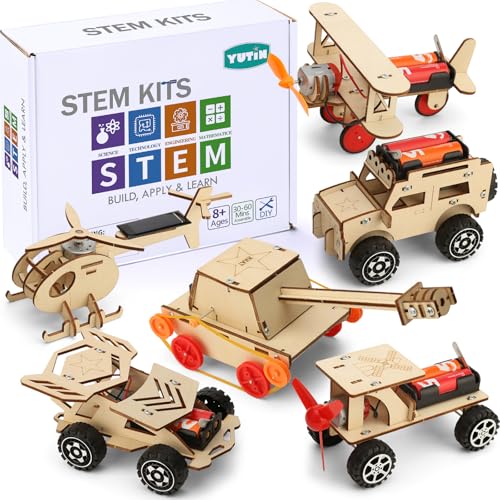
The Yutin STEM Kits bring the excitement of engineering straight to the hands of kids aged 8‑12 (and even curious younger builders). Each 6‑piece set includes a four‑wheel‑drive car, a tank, a wind‑powered vehicle, an off‑road rover, a solar‑powered helicopter and a biplane—plus a handy screwdriver for assembly. Crafted from non‑toxic plywood with smooth surfaces and rounded corners, the pieces are easy to punch‑out and safe for independent play. As children snap the wooden 3‑D puzzles together, they discover how motors work, how energy converts from wind or solar power, and the structural principles behind each vehicle. The kits double as a hands‑on science lesson and a creative craft, sparking imagination while reinforcing basic STEM concepts. Packaged in a vibrant box, the set makes a memorable birthday or holiday gift that feels both fun and educational.
Pros
- Comprehensive vehicle variety – six different models teach multiple engineering concepts in one kit.
- STEM‑focused learning – assembling the models reinforces mechanics, energy conversion, and problem‑solving skills.
- Safe, durable materials – non‑toxic plywood and rounded edges keep the building experience child‑friendly.
Cons
- Battery‑free design – the solar helicopter and wind vehicle rely on external light or airflow, which may limit play in low‑light settings.
- Slightly challenging for younger kids – children under 8 may need adult assistance for the more intricate assemblies.
6. K’NEX Thrills Ultimate Fort

The Fort Building Kit for Kids is a 140‑piece STEM construction set that turns imagination into a tangible hideaway. Each kit contains 30 magic balls, 64 long rods, and 46 extend connectors that snap together in seconds—no tools, no fuss. The lightweight yet sturdy design holds sheets, blankets, or LED lights, letting children create caves, tunnels, teepees, igloos, castles, rockets, and more. A step‑by‑step guide gets the building started, but the real fun begins when kids customize their forts and invite friends to explore.
Built from 100 % safe ABS plastic and certified to ASTM F963 standards, the set encourages problem‑solving, teamwork, and creative thinking—perfect for indoor rainy days or outdoor adventures. The colorful box makes it an eye‑catching gift for birthdays, holidays, or any special occasion for boys and girls aged 4‑12. Plus, the company backs the product with a 180‑day refund or replacement guarantee and responsive customer support.
Pros
- Easy, fast assembly – rods click into balls in seconds; disassembly is just as simple.
- Versatile designs – 140 pieces support a wide range of forts, from simple tents to complex castles.
- STEM learning boost – promotes engineering concepts, spatial reasoning, and collaborative play.
Cons
- Small parts may be a choking hazard for children under 3; supervision is recommended.
- The set relies on additional accessories (blankets, lights) for a complete “fort” experience, which are not included.
5. Melissa & Doug 100-Piece Wooden Puzzle

The STEM Science Kits for Kids blend hands‑on engineering with eye‑catching wooden design, giving 8‑ to 12‑year‑olds five complete experiment models in one box: Newton’s Cradle, Tension Structure, Hydraulic Excavator, Sun‑Earth‑Moon model, and Telegraph. Each kit is laser‑cut from non‑toxic plywood, with smooth surfaces and rounded corners for safe building. Detailed, picture‑based instructions guide children step‑by‑step, turning a challenging puzzle into a satisfying, classroom‑worthy project. While kids under eight may need adult help, the kits are perfect for curious boys and girls who love physics, mechanics, and creative problem‑solving. Finished models double as cool desk decorations, making learning visible and fun. Whether it’s a birthday, back‑to‑school boost, or a holiday surprise, these kits spark imagination and give a real sense of achievement.
Pros
- All‑in‑one learning set – five distinct science experiments cover mechanics, energy conversion, astronomy, and communication.
- Safe, high‑quality materials – non‑toxic plywood, laser‑cut precision, and rounded edges keep hands protected.
- Clear visual instructions – step‑by‑step picture guides make assembly intuitive and reduce frustration.
Cons
- Supervision needed for younger kids – children under 8 may require adult assistance to handle small parts safely.
- Assembly time – completing all five models can take several hours, which may be lengthy for very short attention spans.
4. Poraxy STEM Kit 4 in 1

The Poraxy 4‑in‑1 STEM Kit lets kids aged 6‑13 become mini engineers in just minutes. The set contains everything needed to build four eye‑catching projects: a rotating mini Ferris wheel, a whimsical carousel, a fiber‑optic lamp, and a starry night light. Each model is laser‑cut from high‑quality wood, so pieces snap together smoothly and stay securely in place—perfect for younger builders who want a finished masterpiece they can proudly display on a desk or shelf.
Beyond the build, the kits encourage endless creativity. Once assembled, the Ferris wheel, carousel, and lamps are ready for paint, stickers, or other decorations, letting each child personalize their own “amusement park” décor. The two light‑up models feature color‑changing LEDs that cycle through seven vibrant hues, instantly turning a bedroom into a magical wonderland for bedtime or playtime.
Designed to spark hands‑on learning, the projects develop fine‑motor skills, critical‑thinking, and patience while subtly teaching basic mechanics and simple electrical circuits. Whether it’s a birthday, holiday, or just a surprise, this all‑in‑one STEM experience makes an unforgettable gift for boys and girls alike.
Pros
- All‑in‑one fun: Four distinct builds keep kids engaged for hours without needing extra parts.
- High‑quality, easy assembly: Precision laser‑cut wood fits together effortlessly, ideal for ages 6‑13.
- Customizable & decorative: Paintable surfaces and LED lights let kids personalize their creations.
Cons
- LED power source: The light‑up models require AA batteries, which are sold separately in some regions.
- Limited advanced circuitry: Younger children may outgrow the simple LED circuit quickly and look for more complex electronics.
3. Poraxy 5 in 1 STEM Kit
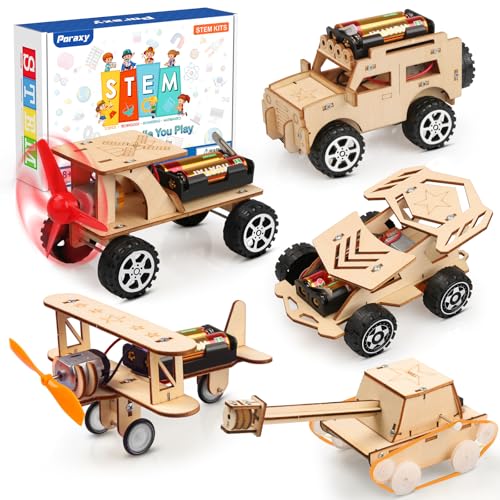
Poraxy’s 5‑in‑1 STEM Kit brings the excitement of real engineering into the hands of kids aged 8‑13. The set contains five distinct model‑car designs, each cut from premium laser‑precision wood, so every piece snaps together smoothly for a frustration‑free build. Kids can paint, decorate, and personalize each car, turning a simple construction project into a creative craft. While assembling, children develop hand‑eye coordination, spatial reasoning, and problem‑solving skills, reinforcing core STEM concepts such as basic mechanics, simple circuits, and design thinking. The kit is completely screen‑free, encouraging focused, hands‑on play that doubles as an educational tool and a memorable birthday or holiday gift.
Key Features
– 5 different model‑car kits in one box
– High‑quality laser‑cut wooden parts for perfect fit
– Encourages STEM learning: mechanics, basic circuitry, and design
– Paintable surfaces for creative customization
– Suitable for ages 8‑13 (boys and girls) and ideal for gifts
Pros
- Versatile learning – multiple engineering concepts are explored across the five models.
- Creative freedom – paint and decorate cars to make each project uniquely yours.
- Premium, durable construction – wood pieces stay together tightly, reducing breakage.
Cons
- Requires adult supervision for younger children when handling small parts or any optional electronic components.
- Assembly time can be longer than typical snap‑together toys, which may challenge very impatient kids.
2. Yutin 5 STEM Science Kit

The Yutin 5‑in‑1 STEM Science Kit turns a quiet afternoon into a hands‑on engineering adventure. Each set is themed around a classic amusement park and includes five wooden projects: a rotating Ferris wheel, a merry‑go‑round, a mini wind‑mill house, a fiber‑optic lamp, and a star‑shaped nightlight with seven color‑changing LEDs (batteries not included). Made from non‑toxic plywood with smooth, rounded edges, the pieces are safe for kids and easy to handle. The clearly labeled board and step‑by‑step manual guide children through popping out the puzzle pieces, screwing them together, and watching their creations come to life. While assembling, kids explore how motors work, experiment with basic circuitry, and develop spatial‑reasoning skills—perfect for ages 8‑12 (and even up to 14). The vibrant, reusable color box makes the kit a standout gift for birthdays, holidays, or a Valentine’s surprise, and the finished models double as decorative room or office accents.
Pros
- All‑in‑one learning experience: five distinct projects teach mechanics, electronics, and design in one box.
- Safe, durable materials: non‑toxic plywood and rounded corners keep the building process worry‑free.
- Creative freedom: once assembled, the wooden pieces can be painted or customized for a personal touch.
Cons
- Battery requirement: the nightlight and fiber‑optic lamp need batteries, which are sold separately.
- Assembly time: younger children may need adult assistance to handle the small screws and motor components.
1. Sillbird 12-in-1 Solar Robot Building Kit
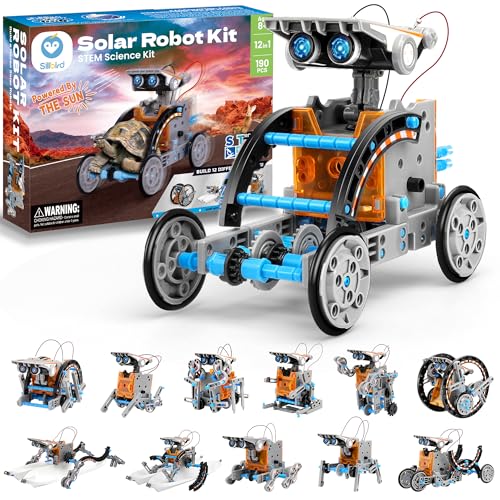
The Sillbird 12‑in‑1 Solar Robot Building Kit turns a sunny day—or a bright flashlight—into a hands‑on science lab. With 190 precision‑cut parts, kids can assemble twelve different robots, cars, and other moving models, each step getting a little more challenging. The oversized solar panel captures plenty of light, so the creations run on clean, renewable energy whether you’re outside or indoors. Clear, step‑by‑step instructions guide young engineers through every build, making solo play or family‑time projects smooth and rewarding. Perfect for birthdays, holidays, or just a screen‑free afternoon, this kit celebrates milestones while sparking curiosity about engineering, problem‑solving, and renewable power.
Pros
- STEM‑focused fun: Hands‑on building teaches engineering concepts and renewable‑energy basics.
- Solar‑powered play: Large solar panel provides strong output; can also run on a flashlight for indoor use.
- 12 models, growing challenge: From simple bots to advanced machines, the kit grows with a child’s skill level.
Cons
- Lighting dependent: Optimal performance needs bright sunlight or a strong artificial light source.
- Small pieces: The 190 components are easy to lose; a tidy workspace is recommended.
Buying Guide
When choosing a STEM building kit for kids, prioritize age‑appropriateness, educational value, and the ability to inspire hands‑on experimentation. A great kit balances engaging challenges with safe, high‑quality components that grow with the child’s curiosity.
- Quality of materials and safety certifications – ensure parts are non‑toxic, robust, and meet ASTM or EN71 standards.
- Educational features and curriculum alignment – look for clear instructions, progressive difficulty levels, and concepts that match school standards.
- Expandability and modularity – kits that allow additional sets or interchangeable pieces extend play value and encourage creativity.
- Age suitability and skill level – verify the recommended age range and whether the kit supports solo building or collaborative projects.
- Value and reviews – compare price per piece, included accessories, and read parent feedback to gauge long‑term satisfaction.
By weighing these factors, you can select a STEM building kit that delivers lasting learning fun and grows alongside your child’s developing skills.
Frequently Asked Questions
Which STEM building kits are best for beginners aged 5‑8?
Answer:
– LEGO Boost – Easy drag‑and‑drop coding with motorized LEGO bricks; great for introducing robotics.
– Kano Computer Kit – Assemble a simple computer and learn basic coding through fun challenges.
– Magformers – Magnetic geometric pieces that develop spatial reasoning without any electronics, perfect for the youngest builders.
What are the top STEM kits for older kids (9‑12) who want more advanced projects?
Answer:
– Snap Circuits – Build working electronic circuits with snap‑together components; includes projects like radios and alarms.
– littleBits Electronic Building Blocks – Modular electronic modules that snap together; encourages invention of gadgets and interactive toys.
– Thames & Kosmos Science Lab – Hands‑on experiments covering chemistry, physics, and engineering, with detailed experiment guides.
How do I choose a STEM kit that matches my child’s interests and skill level?
Answer:
1. Identify the focus area – robotics, coding, electronics, or engineering.
2. Check the age recommendation – Manufacturers usually list the minimum age; aim for the middle of the range for optimal challenge.
3. Look for progressive difficulty – Kits that start simple and add complexity (e.g., modular expansions or multiple project levels) grow with your child.
4. Read reviews and community feedback – Sites like Common Sense Media and parent forums often highlight durability, clarity of instructions, and educational value.
These FAQs should help you pinpoint the most suitable STEM building kits for your child’s age and curiosity.
Conclusion
Choosing the right STEM building kit hinges on fostering curiosity, encouraging hands‑on problem solving, and matching a child’s developmental stage and interests. Look for kits that blend clear, age‑appropriate instructions with open‑ended challenges, allowing kids to experiment and iterate freely. Quality materials, safety standards, and the potential for expansion keep enthusiasm alive long after the first build. By prioritizing versatility, educational value, and engagement, parents can provide tools that not only entertain but also lay a solid foundation for future scientific and engineering pursuits, turning playtime into a launchpad for lifelong learning.

