
7 Best Kid Carrier Backpack Picks for Happy Adventures
Finding the perfect kid carrier backpack can feel like a quest for the holy grail of family outings—comfort for your little explorer, safety features that give you peace of mind, and a design that blends seamlessly with your own style. With endless options on the market, it’s easy to get overwhelmed by flashy claims and confusing specs. That’s why we’ve done the legwork, testing durability, ergonomics, storage capacity, and price to bring you the top seven kid carrier backpacks that truly stand out. In the sections below, you’ll discover honest reviews, pros and cons, and the key reasons each model earns its spot, so you can choose with confidence.
7 Top Kid Carrier Backpacks You’ll Love
We’ve tested dozens, so you can confidently choose the perfect backpack that keeps your child comfortable and safe on every adventure.
7. Mountain Buggy Terrain Hiking Baby Carrier

Your next adventure just got a lot easier. The Hiking Baby Carrier Backpack cradles your little explorer in a padded cocoon with safety straps and stirrups, while a removable sun visor shields them from harsh glare. Designed for long treks, the carrier’s height‑adjustable, heavily padded shoulder straps and load‑bearing waist belt keep your back comfortable, even after hours of hiking. The rugged, waterproof Ripstop Polyester shell stands up to rain, mud, and rugged terrain. Smart storage is built‑in: mesh side pockets, a quick‑grab phone pocket, and an insulated compartment that keeps a bottle at the right temperature. A fold‑out diaper‑changing pad means you’ll always have a clean surface for on‑the‑go changes, and the integrated rain‑and‑sun hood adds an extra layer of protection for your child.
Pros
- Safety first – padded cocoon, safety straps, and stirrups keep your child secure.
- Back‑friendly design – height‑adjustable, padded straps and a load‑bearing belt protect your spine.
- All‑in‑one convenience – multiple pockets, insulated bottle pocket, diaper pad, and weather hood eliminate extra gear.
Cons
- Bulkier than a simple sling – the full‑feature backpack adds extra weight and size.
- Limited size range – may not accommodate larger toddlers beyond the manufacturer’s weight limit.
6. Osprey Poco LT Child Carrier

The Osprey Poco LT is a compact, lightweight child carrier backpack built for families who are constantly on the move. Its sleek, tan‑concrete finish hides a patented stainless‑steel folding frame that snaps securely into place yet folds flatter than most framed carriers—perfect for squeezing into tight airplane seats, crowded sidewalks, or the trunk of a car. The carrier’s adjustable torso system offers up to 6 inches (15 cm) of length change, so multiple caregivers can achieve a customized, ergonomic fit without hassle.
A ventilated AirScape backpanel, featuring deep‑ridged foam wrapped in breathable mesh, promotes airflow and reduces sweat, keeping you cool on long hikes. The built‑in UPF 50 sunshade slides out of a zippered pocket, providing instant protection from harsh rays during sunny outings. With dimensions of 23.6 × 13.8 × 16.9 in and a weight of just 5.56 lb, the Poco LT balances durability with ease of transport, making it an ideal everyday adventure companion for toddlers.
Pros
- Ultra‑compact folding frame – packs flat for travel, storage, and airport checks.
- Adjustable fit for multiple caregivers – 6 inches of torso adjustment accommodates various body types.
- Ventilated AirScape backpanel + UPF 50 sunshade – keeps both carrier and child cool and protected.
Cons
- Limited color options; the tan‑concrete finish may not suit every style preference.
- Small interior pocket size may restrict storage of larger personal items.
5. ClevrPlus Cross Country Toddler Backpack Carrier
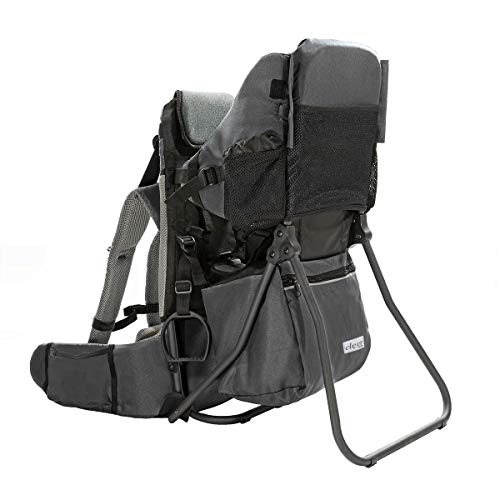
The ClevrPlus Cross Country Baby Backpack Carrier is built for families who love the outdoors but don’t want to leave their little explorer behind. Its one‑piece frame design eliminates any assembly hassle while delivering rock‑solid stability. The carrier’s 5‑point seat belt, flexible straps, and foot stirrups keep toddlers secure and comfortable on rugged trails or city sidewalks. With a lightweight 5.5‑lb frame, padded shoulder straps, a lumbar‑support pad, and an adjustable hip belt that reaches up to 60 inches, both parent and child enjoy a fatigue‑free experience even on long hikes. The spacious main compartment and side pockets hold all essentials—baby changing pad, bottles, diapers, sweaters, phone, and keys—while a detachable sun canopy and rain cover shield your child from the elements. The seat adjusts to grow with children from 9 to 48 months (up to 33 lb), making this carrier a long‑term investment for countless adventures.
Pros
- All‑in‑one safety system: one‑piece frame, 5‑point belt, stirrups, and adjustable straps keep toddlers securely in place.
- Lightweight yet supportive: only 5.5 lb with padded straps, lumbar cushion, and a 60‑inch hip belt for comfortable carrying.
- Weather‑ready versatility: built‑in sun canopy and rain cover protect the child in sun, rain, or wind.
Cons
- The generous storage capacity adds bulk, which may feel a bit large for very compact urban use.
- The adjustable waistband can be time‑consuming to fine‑tune for a perfect fit on the first try.
4. WIPHA Hiking Backpack Carrier

The WIPHA Hiking Backpack Carrier is a thoughtfully engineered shoulder carrier that lets parents explore with their little ones from 6 months up to 2 years old. Its ergonomic design evenly distributes weight across the hips and shoulders, dramatically reducing neck and shoulder strain so you can enjoy longer walks without fatigue. Adjustable waist and leg straps keep your child secure, while the breathable backrest promotes airflow, keeping them cool and upright as they discover the world around them. Weighing just 1.5 kg (3.3 lb) and built from ultra‑light aluminum, this carrier supports up to 40 lb without compromising strength. It’s also TUV‑certified, meeting rigorous safety standards for peace of mind. When you’re done, the carrier folds flat like a laptop, making it a breeze to pack in a suitcase or stash in a closet—perfect for spontaneous outings or everyday errands.
Pros
- Ultimate comfort for both parent and child – ergonomic weight distribution and breathable backrest reduce strain and keep the toddler cool.
- Lightweight yet robust – 1.5 kg aluminum frame supports up to 40 lb, ideal for long hikes and daily use.
- Certified safety – TUV‑approved construction gives confidence that your child is securely strapped in.
Cons
- Limited to toddlers (6 months‑2 years) – older children will quickly outgrow the weight capacity.
- No built‑in rain cover – extra protection is needed in wet weather.
3. Besrey Baby Backpack Carrier 3-Height Seat

The besrey Baby Backpack Carrier is built for adventurous families who want to explore the trail without compromising comfort or safety. Its detachable sunshade doubles as a rain shield, protecting your little one from harsh sun, wind, or sudden showers, while the soft, washable drool pad gives a clean surface for naps on the go. The 5‑point seat belt system, crafted from plush, flexible material, secures toddlers from 16 lb up to 40 lb, and the ergonomic stirrups keep them snug in a natural, seated position.
Storage is plentiful: a spacious main compartment, side zipper pockets on the waist belt, and a hidden under‑seat pocket hold diapers, water bottles, a flashlight, and more. An extra storage bag can be attached for longer outings. Despite its robust frame, the carrier weighs only about 5.5 lb, and the padded shoulder straps and adjustable waist belt distribute weight evenly, reducing fatigue on longer hikes.
Pros
- All‑weather protection – detachable sunshade/rain cover and washable drool pad.
- Secure, comfortable seating – 5‑point soft belt and stirrups keep toddlers safe and relaxed.
- Ample, organized storage – multiple pockets and a detachable bag for gear and essentials.
Cons
- Weight limit ceiling – not suitable for children over 40 lb, which may limit use as they grow.
- Assembly learning curve – multiple buckles and straps can take a few minutes to adjust correctly on first use.
2. Besrey Baby Carrier

The besrey Baby Backpack Carrier is built for adventurous families who want to explore the trail without compromising comfort or safety. Its detachable sunshade doubles as a rain guard, shielding your little one from harsh sun, wind, or sudden showers, while the removable, washable drool pad offers a soft, clean place for the baby’s face. The carrier’s 5‑point seat belts and flexible stirrups keep toddlers securely seated, and the padded shoulder straps plus ergonomic waist belt distribute weight evenly, making long hikes feel light. With a lightweight frame of just 5.5 lb, it supports children from 16 lb up to 40 lb—including gear—while still feeling sturdy. Storage isn’t an afterthought: roomy side pockets, a hidden compartment under the seat, and a zippered waist‑belt pocket let you stash diapers, water bottles, and flashlights, and a detachable storage bag adds even more capacity. Adjustable buckles accommodate a wide range of parent body types, ensuring a personalized fit for every adventure.
Pros
- All‑weather protection – detachable sunshade and rain cover keep the child comfortable in any condition.
- Secure, ergonomic seating – 5‑point harness and padded straps provide safety and balanced weight distribution.
- Generous storage – multiple pockets and a removable storage bag let you carry essentials without extra backpacks.
Cons
- The detachable sunshade adds an extra piece to manage and pack.
- Maximum load (40 lb) may limit use for larger toddlers or heavy gear combos.
1. Deuter Kid Comfort Backpack

The Deuter Kid Comfort Child Carrier and Backpack – Midnight is built for families who love to explore together. Its Kid Comfort design cradles your little one securely while the Aircomfort mesh back system delivers superior airflow, keeping you cool on long hikes. A robust yet flexible spring‑steel frame spreads the load evenly, creating a breathable space between you and the pack. Adjustable with the Vari Slide system, the carrier tailors the fit to any body shape, and the included sun roof, pull‑forward hip fins, padded hip belt, load‑adjustment straps, and sternum belt keep the weight balanced and the backpack stable. Crafted from 210 denier polyamide with ripstop threads and a PU coating, the fabric is lightweight, abrasion‑resistant, and ready for rugged terrain. The carrier does not come with a chin pad, so you’ll need to add one if you prefer extra front‑face support.
Pros
- Maximum ventilation & comfort – Aircomfort mesh back and spring‑steel frame keep you cool and distribute weight evenly.
- Highly adjustable fit – Vari Slide back length and multiple strap options let you fine‑tune the carrier for both parent and child.
- Durable, lightweight construction – 210 denier ripstop nylon with PU coating resists wear while staying easy to carry.
Cons
- No chin pad included, which may be needed for added front‑face stability on steep climbs.
- The extensive adjustment system adds a small learning curve for first‑time users.
Buying Guide
When choosing a kid carrier backpack, focus on safety, comfort, and practicality to ensure both you and your child enjoy outings without strain. A well‑designed carrier balances supportive features with easy handling, making it ideal for hikes, travel, or everyday errands.
- Ergonomic design and padded straps – Look for adjustable, breathable padding that distributes weight evenly across shoulders and hips, reducing fatigue for both adult and child.
- Sturdy frame and weight limit – A robust internal frame should support the manufacturer’s weight rating and keep the carrier stable on uneven terrain.
- Ventilation and climate control – Mesh panels, breathable fabrics, and a removable sunshade help maintain a comfortable temperature for the child inside.
- Convenient storage and accessories – Multiple pockets, cup holders, and a detachable diaper bag add versatility for parents on the go.
- Safety certifications and user reviews – Verify compliance with safety standards (e.g., ASTM, EN) and read verified customer feedback to gauge real‑world performance.
By weighing these factors, you’ll select a kid carrier backpack that delivers lasting comfort, durability, and peace of mind for every adventure.
Frequently Asked Questions
What features should I look for in the best kid carrier backpack?
- Weight capacity & size: Choose a pack that comfortably supports your child’s weight (typically up to 45 lb) and fits your body frame.
- Ergonomic design: Look for padded shoulder straps, a supportive waist belt, and a ventilated back panel to reduce strain.
- Safety elements: Reflective strips, a sturdy frame, and a secure harness or seat belt system keep your child safe.
- Convenient storage: Multiple pockets for diapers, snacks, water bottles, and a dedicated compartment for a diaper bag or small stroller.
- Ease of cleaning: Removable, machine‑washable fabrics are a big plus for everyday use.
Is a kid carrier backpack safe for newborns?
Yes, as long as the carrier is specifically rated for newborns (often labeled “0‑12 months” or “up to 15 lb”). It should have a supportive infant insert that keeps the baby’s hips in the “M”‑shaped position, a head‑and‑neck support or adjustable infant pad, and a tight, snug fit to prevent the baby from slipping. Always follow the manufacturer’s weight limits and positioning guidelines, and never leave a sleeping infant unattended in the carrier.
How do I properly adjust the carrier for a growing child?
- Start with the waist belt: It should sit snugly over your hips, not your waist, and be tightened so the pack sits close to your body.
- Adjust the shoulder straps: Raise or lower them so the pack’s weight is distributed evenly; the straps should be snug but not dig into your shoulders.
- Check the child’s position: The child’s hips should be at a 45‑90° angle, knees higher than the bottom of the seat, and the back upright.
- Re‑measure regularly: As your child gains weight or height, revisit the manufacturer’s size chart and tighten or loosen straps accordingly.
- Test with a short walk: Ensure the carrier feels comfortable for both you and the child before heading out for longer trips.
Conclusion
Choosing the right kid carrier backpack hinges on balancing safety, comfort, and practicality, so parents should prioritize sturdy frames, secure harnesses, and breathable padding that grow with the child. Look for adjustable features that accommodate different ages and body types, as well as thoughtful storage solutions for essentials like diapers, snacks, and personal items. Durability and easy cleaning are essential for everyday use, while ergonomic designs help distribute weight evenly and reduce strain on both the wearer and the child. By focusing on these core criteria—security, adaptability, comfort, and convenience—families can confidently select a carrier that supports active lifestyles and nurtures a sense of adventure together.

